
Create a Wallet
Understand account control and recovery responsibility before creating a new wallet.
Read guide →Use one clear learning path for multi-chain assets, network selection, sending and receiving, DApp connections, token approvals and wallet security. The goal is to understand what a request means before you sign or submit it—not to depend on a familiar-looking interface.
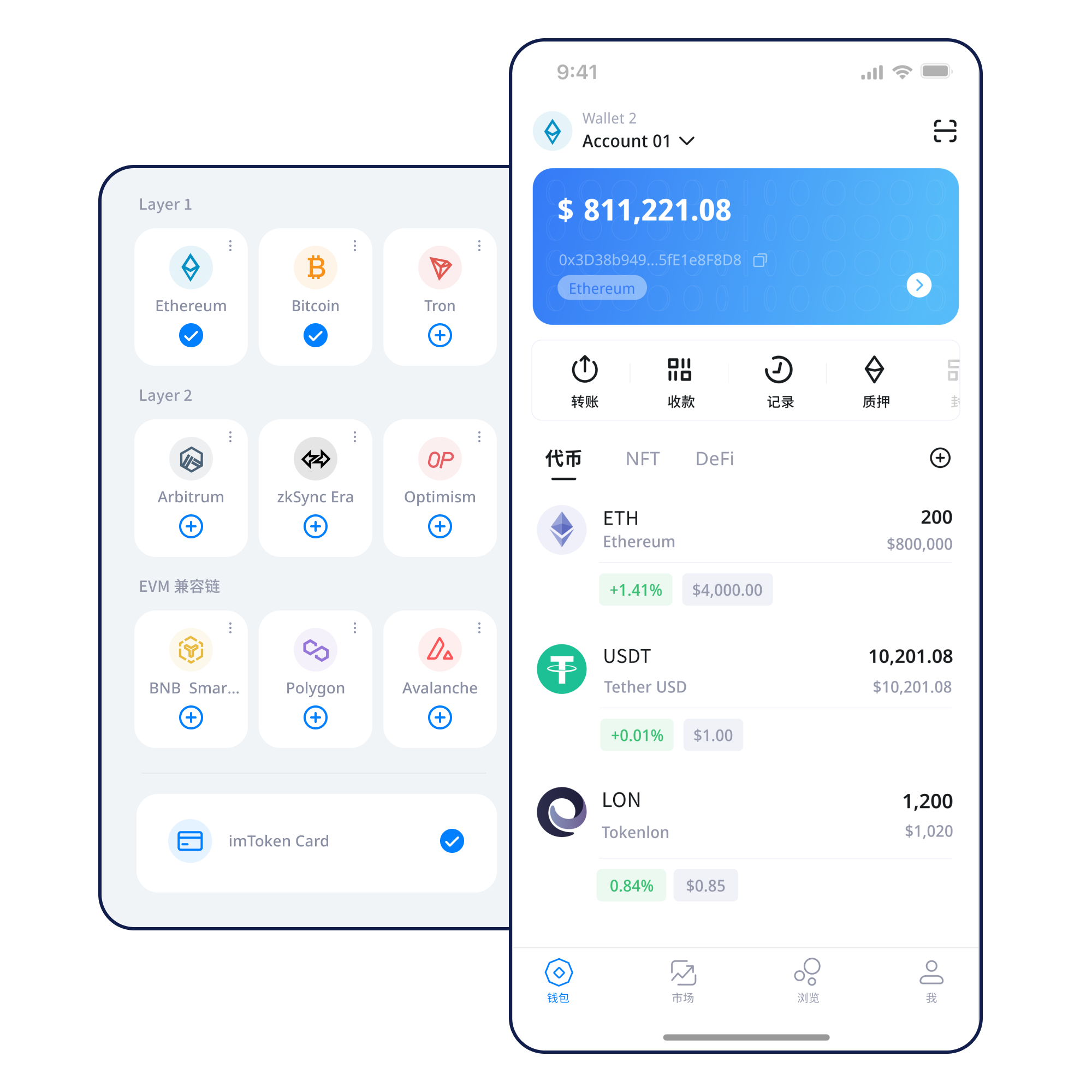
Understand account control and recovery responsibility before creating a new wallet.
Read guide →Keep the seed phrase offline and out of screenshots, cloud drives and messages.
Read guide →Confirm the receiving network before sharing an address with the sender.
Read guide →Review the address, network, amount, gas and transaction details before signing.
Read guide →Verify the domain and account scope, then treat each signature and approval separately.
Read guide →A wallet is more than an asset list. Network identity, addresses, transaction state, contract permissions and recovery information all affect what an action means on-chain.
Compare network identity, native gas and confirmation behavior before switching chains.
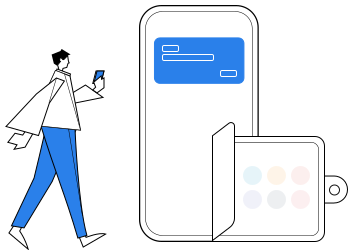
Review address, network, amount, gas and transaction hash as one connected workflow.
View assets, manage networks, review transaction history and enter DApp workflows from mobile.
Separate public account access from signatures, token approvals and disconnection. A prior connection is not permission to approve every later request.
Keep recovery information offline, and review approvals, signatures and transfers as distinct decisions.
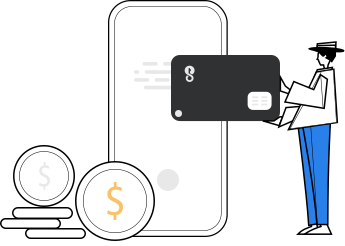
Public chains, EVM networks and Layer 2 systems can share address formats or asset names while keeping separate chain state, gas assets and confirmation paths.
Use network identity, native gas, address behavior and confirmations to identify the chain context.
Read topic →Nodes, blocks, transactions and consensus create publicly verifiable chain state.
Read topic →
EVM-compatible chains share execution patterns while balances, gas assets and contracts remain network-specific.
Read topic →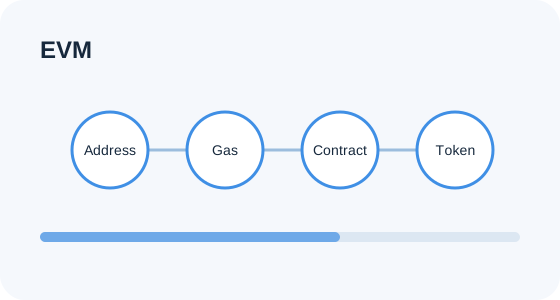
Learn the base-layer relationship, bridge path, confirmation process and possible exit delay.
Read topic →
Interpret fees, broadcasts and confirmation state together with the target network and transaction hash.
Read topic →Separate acquisition, account creation, backup, network verification, transfers and permission maintenance so every stage can be reviewed independently.
Use the common download entry point rather than installation links from unknown messages.
Know whether you are creating a new account or restoring an existing one.
Keep seed phrases and private keys offline and never send them to another person.
Confirm the destination chain, address context and native gas asset.
Review address, network, amount and fees, then retain the public transaction hash.
Verify transaction state and periodically remove permissions that are no longer needed.
Verify the DApp domain before connecting. A connection establishes account context, but later message signatures, transaction signatures and token approvals still need individual review.
Security note: Connecting a wallet does not mean every signature request should be accepted. Review each signature and approval independently.
Open the Web3 guide →Seed phrases and private keys stay under user control, and official staff should never request them. Check address, network and amount before a transfer; check the domain, signature meaning and approval scope before a DApp action. On-chain transactions generally cannot be unilaterally reversed by a wallet, so pre-confirmation review matters more than recovery promises.
Open Security CenterAn address identifies an on-chain account; seed phrases and private keys relate to account control; the network determines where assets and transactions exist; gas represents execution cost; a transaction hash provides public verification; and DApps extend wallet use through connections, signatures and approvals. Understanding those relationships makes unexpected requests easier to detect.
Read Getting Started →Validators participate in Ethereum PoS consensus. Rewards, withdrawals, exits, waiting periods and penalties are shaped by protocol rules and network conditions, so mechanism should be understood before return expectations.
Learn validator responsibilities, reward sources, withdrawal mechanics, exit flow and possible waiting periods.
Learn more →Staking does not guarantee returns. Validator penalties, smart-contract risk, third-party service risk, exit delays and asset-price volatility all matter.
PoS & Validators →Notices are organized by product, network, security and service. When there is no verified date, the site uses descriptive labels rather than inventing dates, partnerships, funding claims or market statistics.
Find clear answers about account control, networks, transaction confirmation, DApp permissions and PoS risk.
A digital wallet manages on-chain accounts, addresses, key-controlled signing and transaction requests; the assets themselves are recorded on blockchain networks.
Prefer offline storage and avoid screenshots, cloud drives and chat messages. Never send it to another person.
The same asset name or address format can exist across different chains, while balances and transaction state remain network-specific.
Gas measures computational resources used by transactions or contract execution, with cost affected by network conditions and transaction complexity.
No. A connection can be followed by separate message signatures, transaction signatures and token approvals, each requiring its own review.
No. Rewards can change and participation can involve validator penalties, contract risk, exit delays and asset-price volatility.
Use the common download entry point when ready, or start with wallet basics, network knowledge and security guidance.